Explore French cuisine with your five senses
Have you ever tried to describe a delicious piece of cheese, a warm croissant or a glass of apple juice in French… and found yourself saying only “C’est bon !”?
There are many more ways to talk about what you are experiencing!
In France, La Semaine du Goût (Taste Week) celebrates food, flavours and the pleasure of discovering what we eat. It is also the perfect opportunity to learn how French speakers use their five senses — les cinq sens.
So, choose something tasty and get your senses ready!
What Are the Five Senses in French?
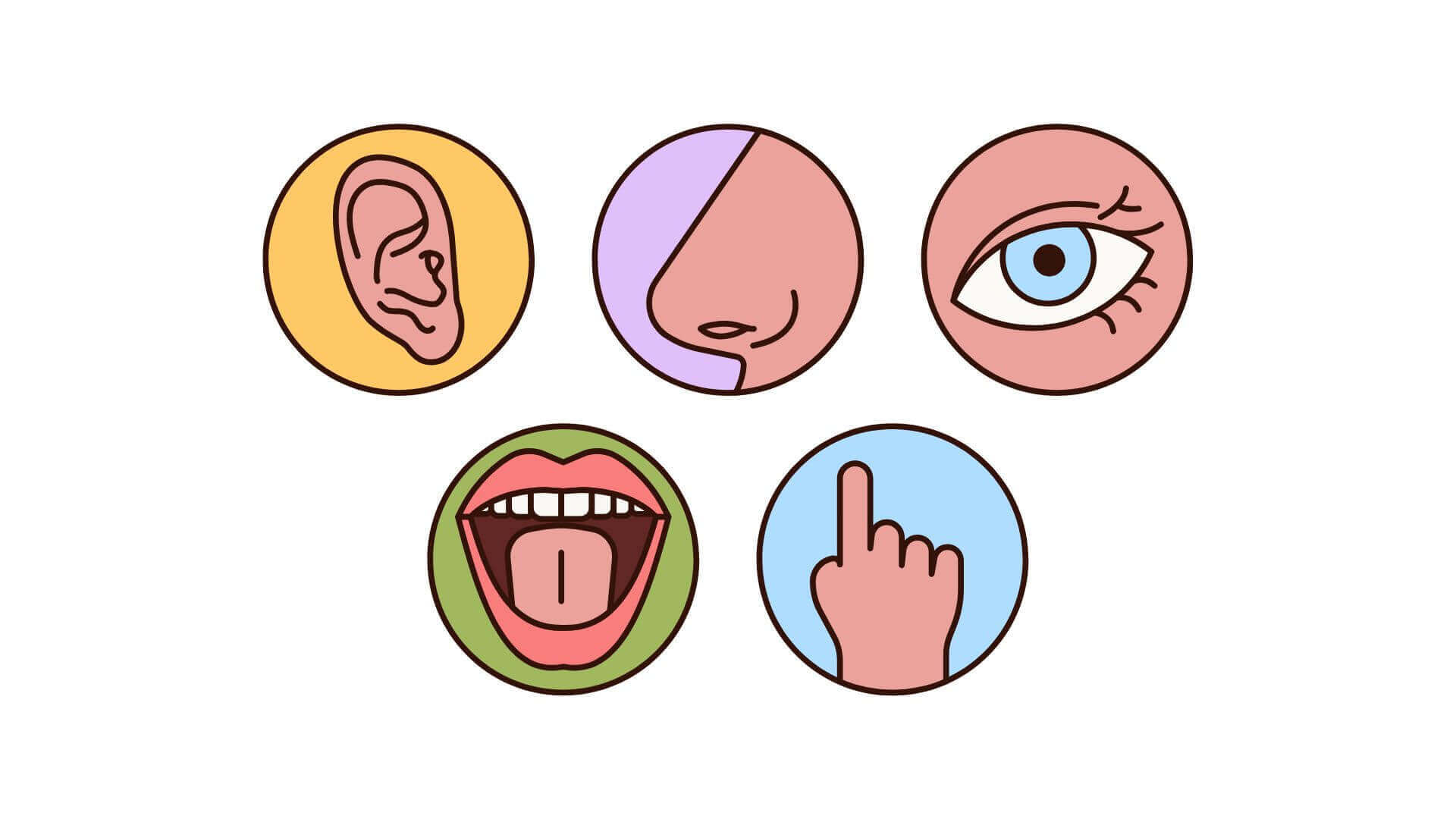
The five senses are:
👀 la vue – sight
👃 l’odorat – smell
👅 le goût – taste
✋ le toucher – touch
👂 l’ouïe – hearing
When we eat, we actually use several of these senses at the same time.
Think about a fresh baguette. You see its golden colour, smell the bread, hear the crust crack, feel its texture… and finally taste it.
Let’s find the French words to describe all of that.
How Can You Describe Taste in French?
Le goût means taste.
Here are some essential words:
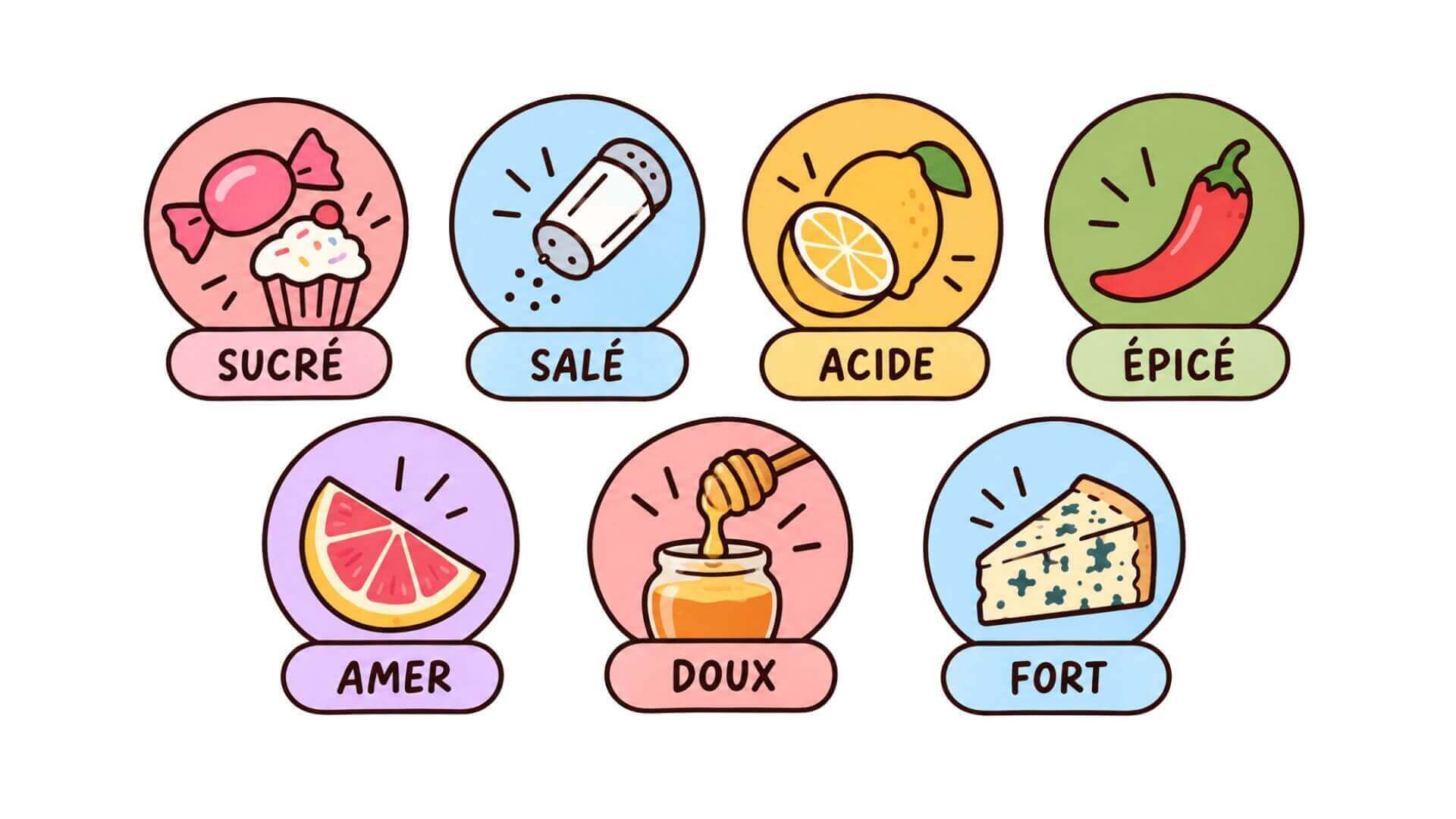
- sucré(e) – sweet
- salé(e) – salty
- acide – sour / acidic
- épicé(e) – spicy
- amer / amère – bitter
- doux / douce – mild
- fort(e) – strong
You can say:
C’est sucré. – It’s sweet.
Le fromage est assez fort. – The cheese is quite strong.
Je trouve ça un peu trop salé. – I find it a little too salty.
💡 Useful expression:
Ça a le goût de… = It tastes like…
Ça a le goût de citron.
It tastes like lemon.
How Can You Talk About Smell in French?
Your sense of smell is l’odorat, and une odeur means a smell.
Useful adjectives include:
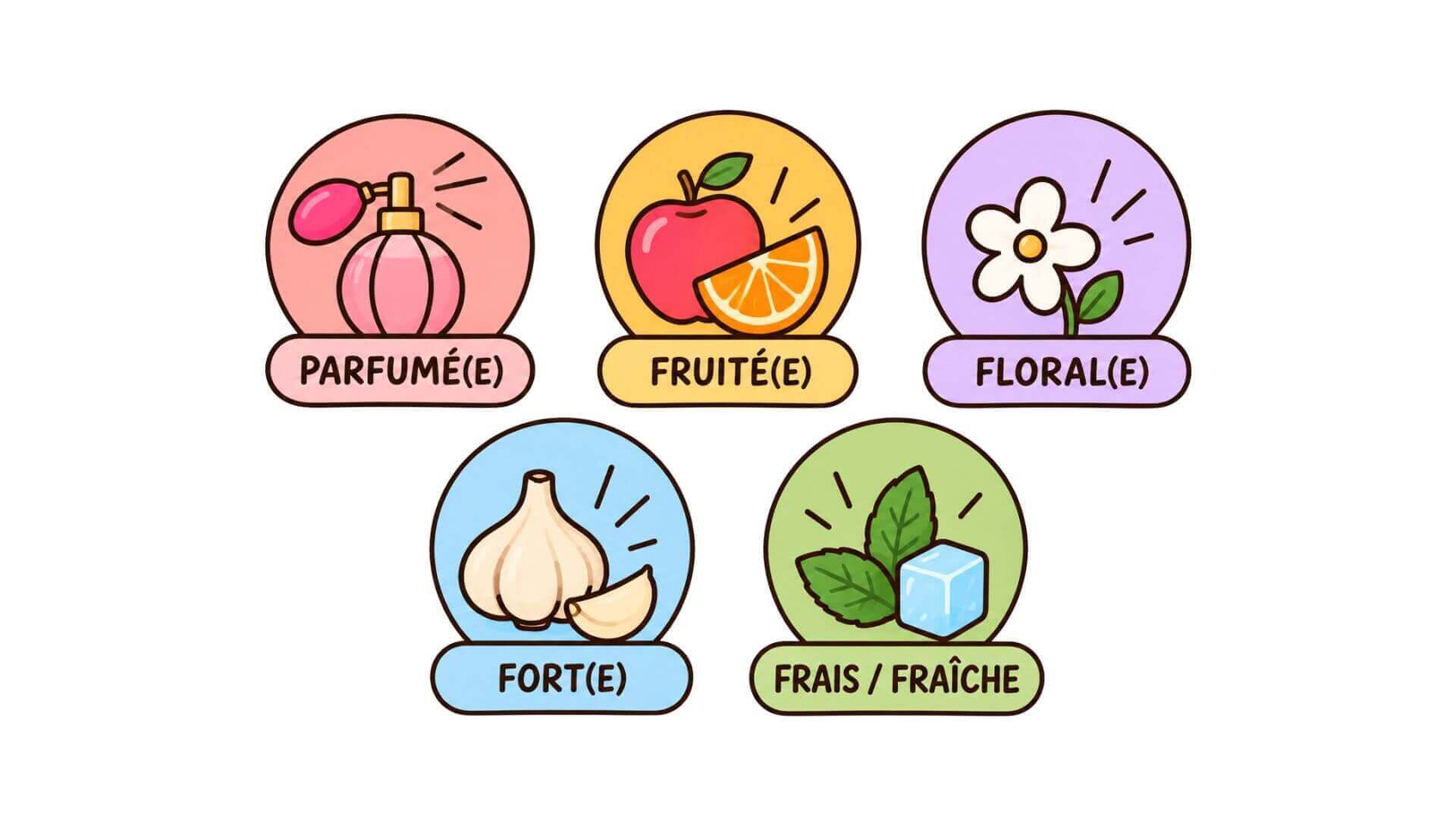
parfumé(e) – fragrant
fruité(e) – fruity
floral(e) – floral
fort(e) – strong
frais / fraîche – fresh
A very useful verb is sentir.
Ça sent bon! – It smells good!
Ça sent le chocolat. – It smells like chocolate.
Be careful: sentir can mean “to smell” or “to feel”, depending on the context.
How Can You Describe Texture and Sound?
Food is not only about flavour.
Think about biting into a fresh baguette or an apple.
You might describe it as:
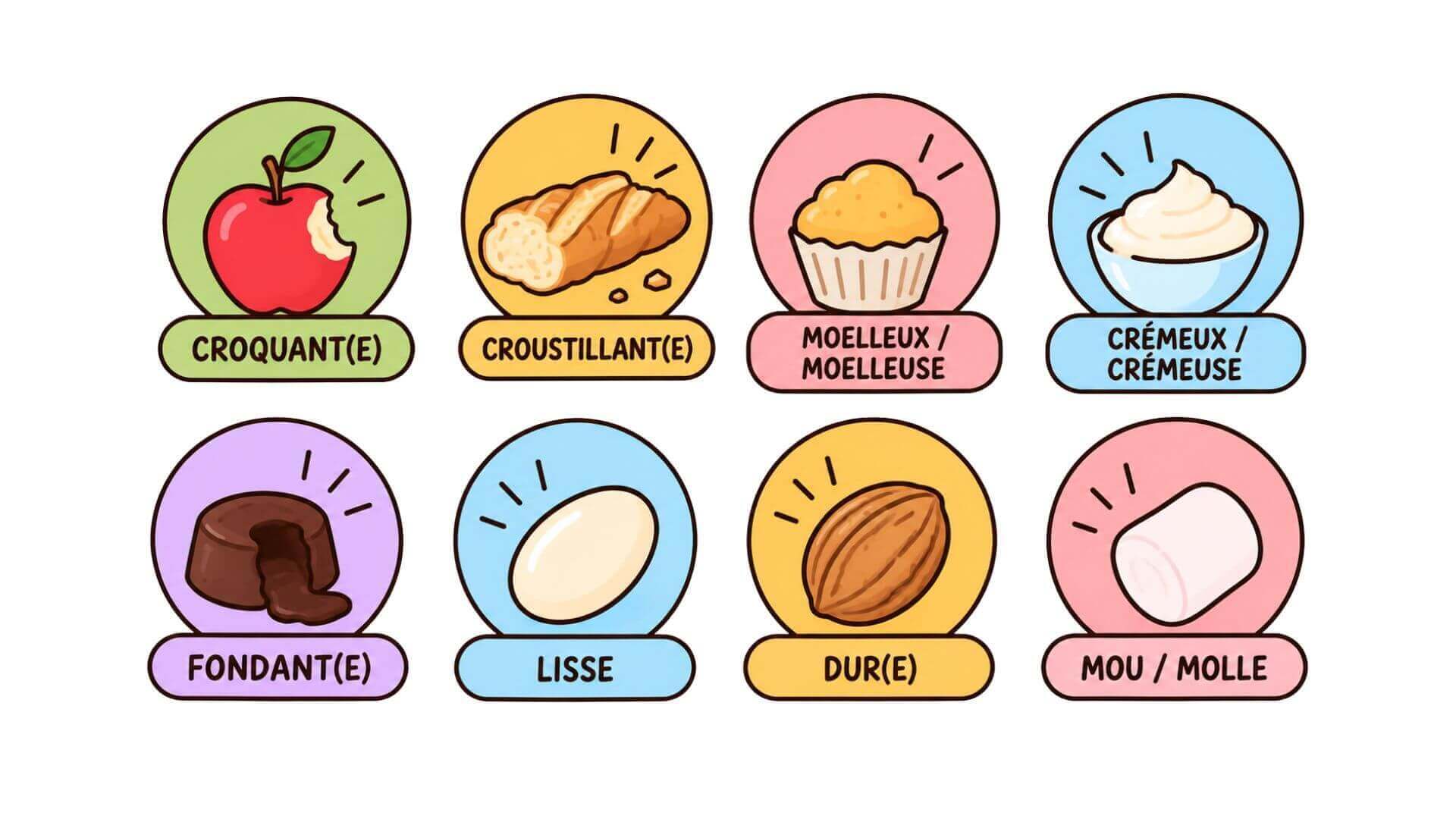
croquant(e) – crunchy
croustillant(e) – crispy
moelleux / moelleuse – soft
crémeux / crémeuse – creamy
fondant(e) – melt-in-the-mouth / melting
lisse – smooth
dur(e) – hard
mou / molle – soft
Some words can involve more than one sense.
Croquant, for example, describes a texture, but it also makes us think of the sound we hear when we bite into something.
Crunch!
Can You Describe Food Using Your Five Senses?
Now it’s your turn.
Choose something from your kitchen: a piece of fruit, some chocolate, bread, cheese… whatever you like.
Look at it, smell it, touch it and taste it.
Then try to complete these sentences in French:
👀 Je vois…
I see…
👃 Je sens…
I smell…
✋ Je touche…
I touch / feel…
👂 J’entends…
I hear…
👅 Je goûte…
I taste…
❤️ Je trouve ça…
I find it…
The next time you taste a French cheese, pastry or dish, try not to stop at “C’est bon !”. Describe what you can see, smell, hear, touch and taste.
That is when vocabulary becomes something you can actually experience.